Destination guide
The Best Things to Do in Lanzarote
Last updated · 9 min read
The best things to do in Lanzarote on a first visit are touring the volcanic Fire Mountains of Timanfaya, exploring the lava caves at Jameos del Agua and Cueva de los Verdes, taking in the view from Mirador del Río and spending a day on the Papagayo beaches. Add a wine tasting in La Geria and the Sunday market in Teguise if you have time.
Lanzarote is unlike any other Canary Island. Its landscape was reshaped by huge eruptions in the 18th century, and the artist César Manrique later helped protect it from high-rise development. The result is an island of black lava fields, white villages and striking art, all within an easy drive.
Lanzarote attractions at a glance
| Attraction | Area | Suggested time | Best for |
|---|---|---|---|
| Timanfaya National Park | South-west | 2 to 3 hours | Everyone |
| Los Hervideros | West coast | 30 minutes | Photos, a quick stop |
| El Golfo | West coast | 1 hour | Scenery, lunch |
| Cueva de los Verdes | North | 1 hour | Families, geology |
| Jameos del Agua | North | 1 to 1.5 hours | Art and architecture |
| Jardín de Cactus | North-east | 1 hour | Gardens, photos |
| Mirador del Río | Far north | 45 minutes | Views |
| Papagayo beaches | South | Half a day | Swimming, sunbathing |
| Famara | North-west | Half a day | Surfing, walks |
| La Graciosa | Island off the north coast | A full day | Getting away from it all |
| La Geria | Centre | 2 to 3 hours | Wine lovers |
| Teguise market | Centre | A Sunday morning | Shopping, local life |
Volcanic landscapes and natural wonders
Timanfaya National Park
Timanfaya is the highlight of most visits. Between 1730 and 1736, a long series of eruptions buried a large part of the island under lava and ash, creating the red and black landscape now known as the Fire Mountains. The ground is still hot just below the surface.
Your ticket includes a coach tour along the Route of the Volcanoes, as private cars aren't allowed on the park's inner roads. At the visitor area on Islote de Hilario, staff show how hot the ground is by pouring water into the earth, which shoots back as steam. Arrive early in the day to avoid queues at the entrance.
The restaurant at Islote de Hilario, designed by César Manrique, grills food over a natural vent in the volcano, which makes for a memorable lunch stop. For more background on the eruptions, the free Timanfaya visitor centre at Mancha Blanca has displays on the island's geology.
Camel rides across the edge of the volcanic slopes start from a separate stop on the road south of the park.
Los Hervideros
On the west coast, Los Hervideros is a stretch of jagged lava cliffs where Atlantic waves surge into caves and blowholes. Paths and viewpoints let you look down into the churning water. It's free and only needs half an hour, so combine it with El Golfo nearby.
El Golfo
El Golfo is a half-sunken volcanic crater with a vivid green lagoon, the Charco de los Clicos, which gets its colour from algae. It sits beside a black sand beach and below red and brown cliffs. The small village next door has seafood restaurants overlooking the ocean, which are especially good at sunset.
Cueva de los Verdes
In the north of the island, Cueva de los Verdes is part of a lava tube several kilometres long, formed when a river of lava cooled on the outside while still flowing underneath. Guided tours lead you through lit chambers and passages, and the tour ends with a surprise that's best left unspoiled.
Art and architecture
César Manrique shaped modern Lanzarote, turning several natural sites into spaces that blend art, architecture and landscape. His work is the island's other big draw after the volcanoes, and our guide to César Manrique's Lanzarote tells the full story of his life and influence.
Jameos del Agua
Jameos del Agua is built inside a collapsed section of the same lava tube as Cueva de los Verdes. A natural underground lake is home to tiny blind white crabs found almost nowhere else, while above ground there's a bright white pool, gardens and a concert auditorium inside the cave.
It's one of the best examples of Manrique's idea that buildings should work with nature rather than against it, and it's just as impressive in the evening, when the site opens for dinner and events on certain nights.
Jardín de Cactus
Manrique's Jardín de Cactus, near Guatiza, fills an old quarry with thousands of cacti from around the world, arranged in terraces around a restored windmill. It's one of the most photogenic spots on the island and a good stop on a day touring the north.
Mirador del Río
At the northern tip of the island, Mirador del Río is a viewpoint built into the cliff, around 475 metres above the sea. Huge windows look out over the strait to La Graciosa and the smaller islands beyond. On a clear day it's one of the best views in the Canaries.
There's a café inside with the same views, which makes it a good place for a break on a day exploring the north. Go on a clear morning if you can, as cloud often gathers on the cliffs later in the day.
Best beaches and outdoor activities
Papagayo
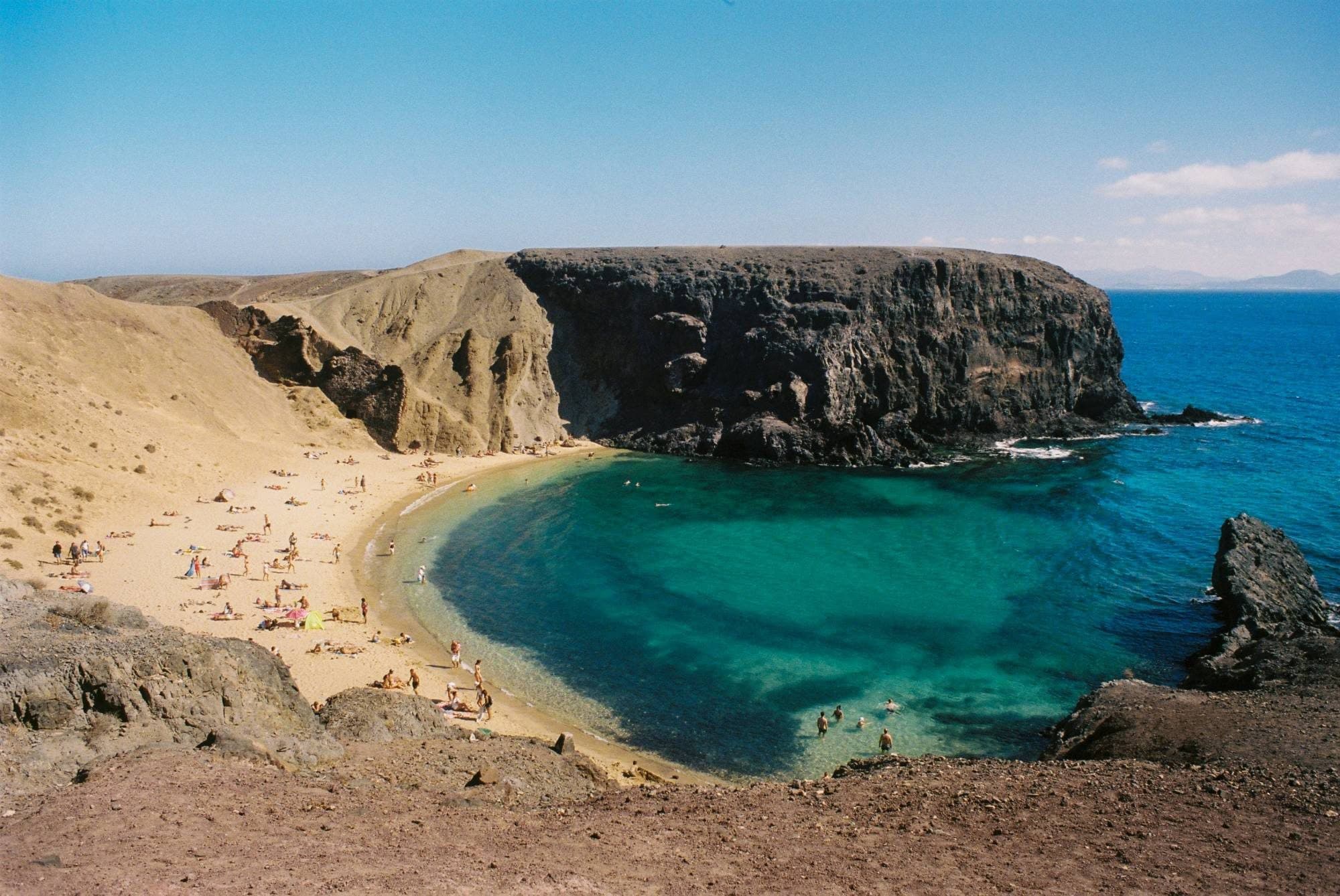
The Papagayo beaches, east of Playa Blanca, are a string of golden coves protected within a natural park. The water is clear and usually calm, making them some of the best places to swim on the island. A dirt track leads to the car parks, and there's a small charge for cars. Facilities are limited, so take water and shade.
Playa Mujeres is the longest of the coves, while Playa de Papagayo itself, the one that gives the area its name, is the most photographed. Arrive early in summer, as the car parks fill up by late morning.
Famara
Famara, on the north-west coast, is a long, wild beach beneath towering cliffs. It's the island's surfing centre, with surf schools in the village, and it's great for long walks. The currents can be strong, so it's not the best beach for casual swimming.
The village of Caleta de Famara, with its sandy streets and low white houses, has a laid-back surf-town feel and a few good fish restaurants. The walk along the beach towards the cliffs is one of the best on the island.
La Graciosa
La Graciosa is a small island off Lanzarote's northern tip, reached by a short ferry from Órzola. There are no tarmac roads, just sandy tracks, so visitors explore on foot, by hire bike or in a 4x4 taxi. Its beaches are among the emptiest in the Canaries, and the harbour village of Caleta de Sebo has a handful of simple restaurants.
The island and the waters around it are part of a protected marine reserve, which keeps the sea exceptionally clear. Book your ferry in advance in summer and take everything you need for the beach, as there's little shade and few facilities outside the village.
Food, wine and local culture
La Geria
In La Geria, vines grow in hollows dug into the black volcanic ash, each protected from the wind by a curved stone wall. The landscape looks like nowhere else, and the bodegas along the main road offer tastings of local wines, especially Malvasía. If you plan to taste, arrange a driver or take a tour.
El Grifo, one of the oldest wineries in the Canary Islands, has a small wine museum alongside its tasting room, and several smaller family bodegas along the road welcome visitors for a glass and a plate of local cheese.
Teguise market
Teguise, the island's former capital, holds a large market every Sunday morning. Stalls fill the old streets with crafts, clothes, local cheese and street food. Arrive early, before the coaches, and stay for lunch in one of the town's squares.
On the hill above town, the Castillo de Santa Bárbara houses a small museum about the pirates who once raided the island, and the views across Lanzarote's interior are worth the short drive.
Look out for local specialities too: papas arrugadas (small wrinkled potatoes) with mojo sauce, fresh fish, goat's cheese and gofio, a toasted grain flour used in many traditional dishes.
Things to do in Lanzarote with kids
- Ride a camel at the edge of the Timanfaya volcanoes.
- Spend a day at Rancho Texas Lanzarote Park in Puerto del Carmen, with animal shows and a water park area.
- Cool off at the Aqualava water park in Playa Blanca.
- Visit the Lanzarote Aquarium in Costa Teguise to see sharks, rays and local sea life.
- Head to the calm, shallow beaches at Playa Dorada in Playa Blanca or Playa Grande in Puerto del Carmen.
How to see Lanzarote in 3 days
- Day 1, the south and west: Timanfaya in the morning, then Los Hervideros and El Golfo, with lunch or an early dinner in El Golfo village.
- Day 2, the north: Cueva de los Verdes and Jameos del Agua, then Mirador del Río and the Jardín de Cactus on the way back.
- Day 3, the centre and coast: Teguise (best on a Sunday for the market), then La Geria for a wine tasting, or a lazy afternoon at Papagayo.
Lanzarote is only about 60 kilometres long, so none of these drives is long. A hire car gives you the most freedom, though organised coach tours cover the main sights if you'd rather not drive.
Try to start early each day. The most popular sights get busy from late morning, when the coach tours arrive, and the light is better for photos earlier in the day.
Lanzarote holiday planning tips
| Option | Good for | Things to know |
|---|---|---|
| Hire car | Freedom, beaches, early starts | Roads are good and quiet; parking is easy outside the main resorts |
| Coach tours | Non-drivers, Timanfaya and the north in one day | Fixed timings and busy stops |
| Local buses | Resort-to-resort trips | Less useful for reaching the main sights |
Lanzarote is warm all year, with highs from the low twenties in winter to around 29°C in late summer, and it's often breezy. The trade winds tend to be strongest in summer, which keeps the heat comfortable but can make the north and west coasts feel exposed. Our Lanzarote destination guide compares the main resorts, from lively Puerto del Carmen to quieter Playa Blanca, so you can pick a base before you book.
If you're flying from the UK, booking airport parking before you travel is usually cheaper than paying on the day. And when you're ready to compare holidays, you can browse current Canary Islands holiday deals that include Lanzarote and its neighbours.
Frequently asked questions
What is Lanzarote best known for?
Lanzarote is best known for its volcanic landscapes, especially Timanfaya National Park, and for the work of the artist César Manrique, whose sites such as Jameos del Agua and Mirador del Río blend art with nature. It's also known for year-round sunshine and its unusual vineyards in La Geria.
Do you need a car in Lanzarote?
You don't need one, but it helps. Distances are short and the roads are good, so a hire car makes it easy to reach the beaches and sights. Without a car, organised tours cover the main attractions and buses link the resorts.
How many days do you need in Lanzarote?
Three days is enough to see the main sights. A week lets you combine them with beach days, a trip to La Graciosa and time to relax.
What is there to do in Lanzarote when it is windy?
Head underground to Cueva de los Verdes or Jameos del Agua, visit the César Manrique Foundation, tour the La Geria bodegas or explore Teguise. The beaches around Playa Blanca and Papagayo, on the south coast, are often more sheltered than those in the north.
Ready for Lanzarote?
Explore Lanzarote's resorts and beaches, then compare current holiday deals for the island.
Explore Lanzarote holidaysSome links on this page go to our travel partners. If you book through them we may earn a commission, at no extra cost to you. How we work with partners